
Geoff Waugh
Co-founder · CEO
What if marking wasn’t the end of learning, but the means to it?
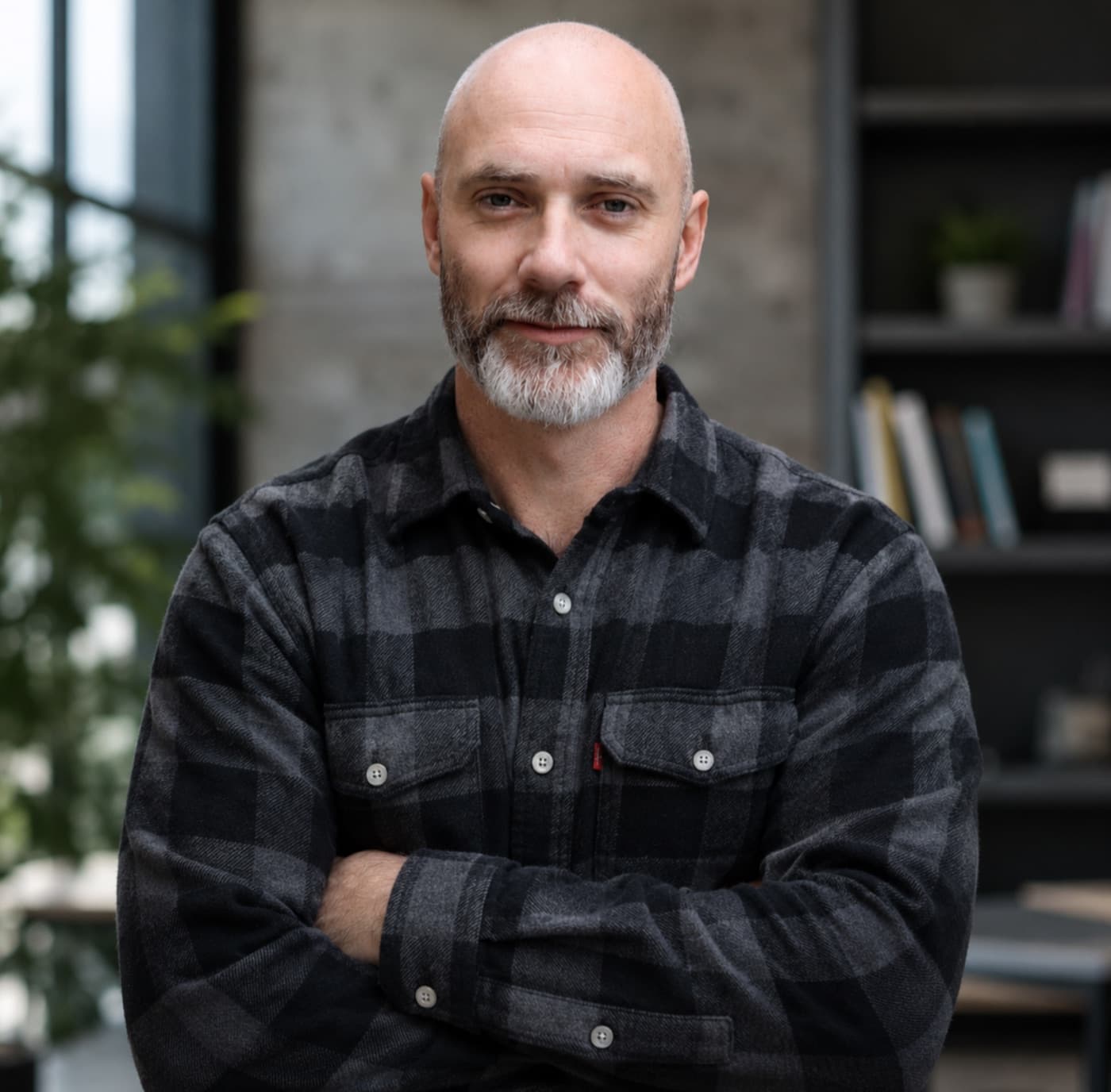
It’s an unlikely thing to be passionate about. However we are people who became obsessed with marking. Truth be told, teachers see it as abjectly essential, but hardly an enjoyable task, to put it mildly. Few teachers have ever woken up and said “I can’t wait to mark today”, which is surprisingly exactly what we say.
We do love marking, and we aren’t ashamed to say it. However we didn’t love the tedium, we didn’t love that it is a laborious solitary process, we certainly didn’t love what it was, we are passionate about unlocking the future of assessment.
It is by a margin the greatest opportunity for insight, departmental and teacher level learning, to understand deeply what students have mastered, where they are lagging behind, and to be able to teach in a more targeted and effective way.
Well, the hard reality is two equally skilled teachers almost always land on different scores, and it took them days if not weeks to get to that conclusion. Every department knows it. Nobody has the time or the second marker to correct it across hundreds of papers. Ofqual and exam boards openly admit that inconsistency and moderation issues are ‘just part of marking’. That can change, it needs to change.
We didn’t think teacher workload and marking consistency were two separate problems. In any organisation, consistency is what quality is made of, and a department can’t be consistent when the whole thing runs on how much of a teacher’s PPA or weekend is left, when the deadline is or differences in judgement. That isn’t a failure of skill or professionalism. It’s just what being human looks like at scale.
We believed it was possible to build a marking intelligence platform that solves consistency, moderation, collaboration while improving teacher wellbeing which is at a crisis point in the UK. We wanted to build a vehicle that could transform the way departments and individual teachers mark, while keeping a teacher’s professional judgement in the driver’s seat.
Geoff and Stuart met at university and lived together before going separate ways. Geoff went into education, lecturing at university in Vietnam for 7 years before teaching Keystage 3 & 4 in England for the last 4 years. Stuart has been professionally coding since 2010, ending up as a head software engineer for notable companies in London, including EdTech.
Marking on a Sunday, with the sun shining outside. His son begging to play football in the garden or go to the playground, but he was relegated to an iPad yet again. Geoff pioneered lessons on Digital Wellness in PSHE and finally decided he’d had enough. There must be a better way. So he started building something himself, he called it DeepMark v1. It was, by his own description, a pile of vibe code spaghetti. It also ‘sort of’ worked and teachers were excited about it. Unknown to Geoff, Stuart had been thinking about a related problem, consistency and moderation issues in GCSE marking.
Geoff is still a practising teacher anchored to the industry, and Stuart taught Computer Science briefly as well. Stuart is no stranger to teaching, with his mother, sister, brother and many of his extended family being teachers. Nobody wandered into this industry looking for an opportunity to profit, but a problem to solve they had felt personally.
They disagree constantly. Neither takes it personally.
DeepMark Labs Ltd is a company registered in England and Wales (Company No. 17415382).